

.jpeg "Apple Watch Repair in Noida – iWatch Service Centre and Repair Assistance")

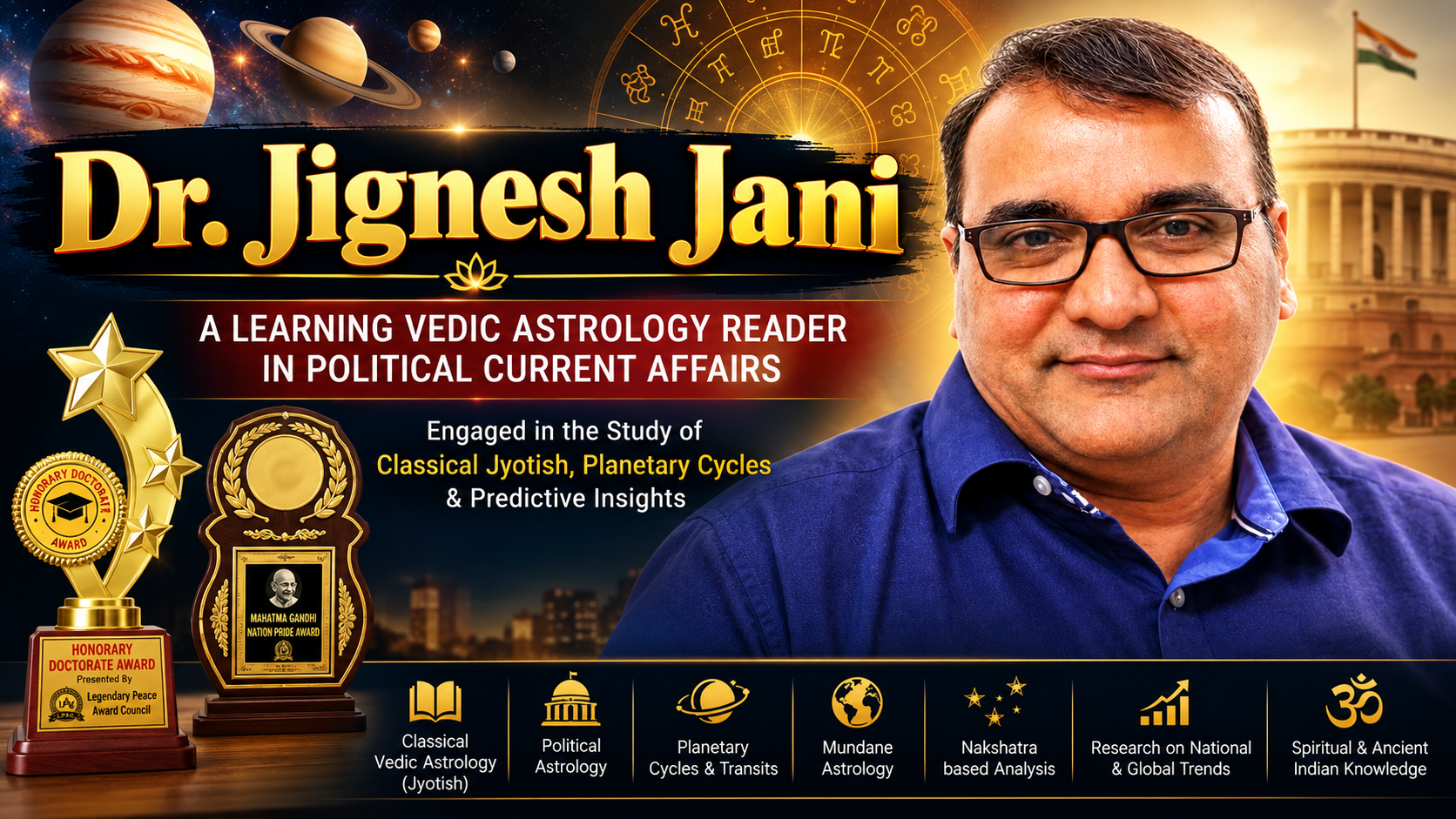
Jignesh Jani Shares Astrological Observations on Diplomacy and Global Leadership
Ahmedabad | July 10, 2026: Vedic astrology researcher Jignesh Jani has shared his observations on the symbolic relationship between planetary cycles, diplomacy, and global leadership through the lens of traditional Jyotish. According to Jani, many Vedic astrologers interpret the current planetary alignments as representing a period in which thoughtful leadership and international dialogue are especially important for maintaining global stability.
Jani explained that Vedic astrology has historically been used to examine broader social and collective trends rather than predict specific future events. He emphasized that planetary movements are viewed symbolically within the tradition and should not be regarded as scientifically established evidence for forecasting wars, diplomatic outcomes, or political developments.
Discussing the present astrological landscape, Jani referred to the Mars–Rahu conjunction, commonly known as Angarak Yoga, which many practitioners associate with assertive energy, strategic planning, and increased geopolitical activity. He noted that while these interpretations are part of classical astrological literature, they should be understood as symbolic observations rather than definitive predictions.
Jani also highlighted the significance of the Saturn–Neptune alignment, which many astrologers interpret as reflecting institutional change, evolving political systems, and shifts in global alliances. According to him, these symbolic patterns invite reflection on how governments and international organizations respond to changing global circumstances.
A central theme of Jani’s observations was the traditional role of Jupiter in Vedic astrology. Often associated with wisdom, ethics, justice, education, and diplomacy, Jupiter is viewed by many practitioners as encouraging responsible leadership, balanced decision-making, and peaceful negotiations. Jani believes these values are especially relevant in today’s interconnected world.
“Leadership grounded in wisdom, dialogue, and cooperation has always been essential for resolving international challenges,” Jani said. “Astrology may provide symbolic perspectives on collective cycles, but the future depends on the decisions made by leaders and institutions committed to peace.”
Jani concluded by encouraging readers to view Vedic astrology as part of India’s rich cultural heritage while relying on evidence-based geopolitical analysis to understand current affairs. He also expressed hope that diplomacy, mutual respect, and constructive international engagement will continue to guide nations toward long-term peace, stability, and sustainable global development.